
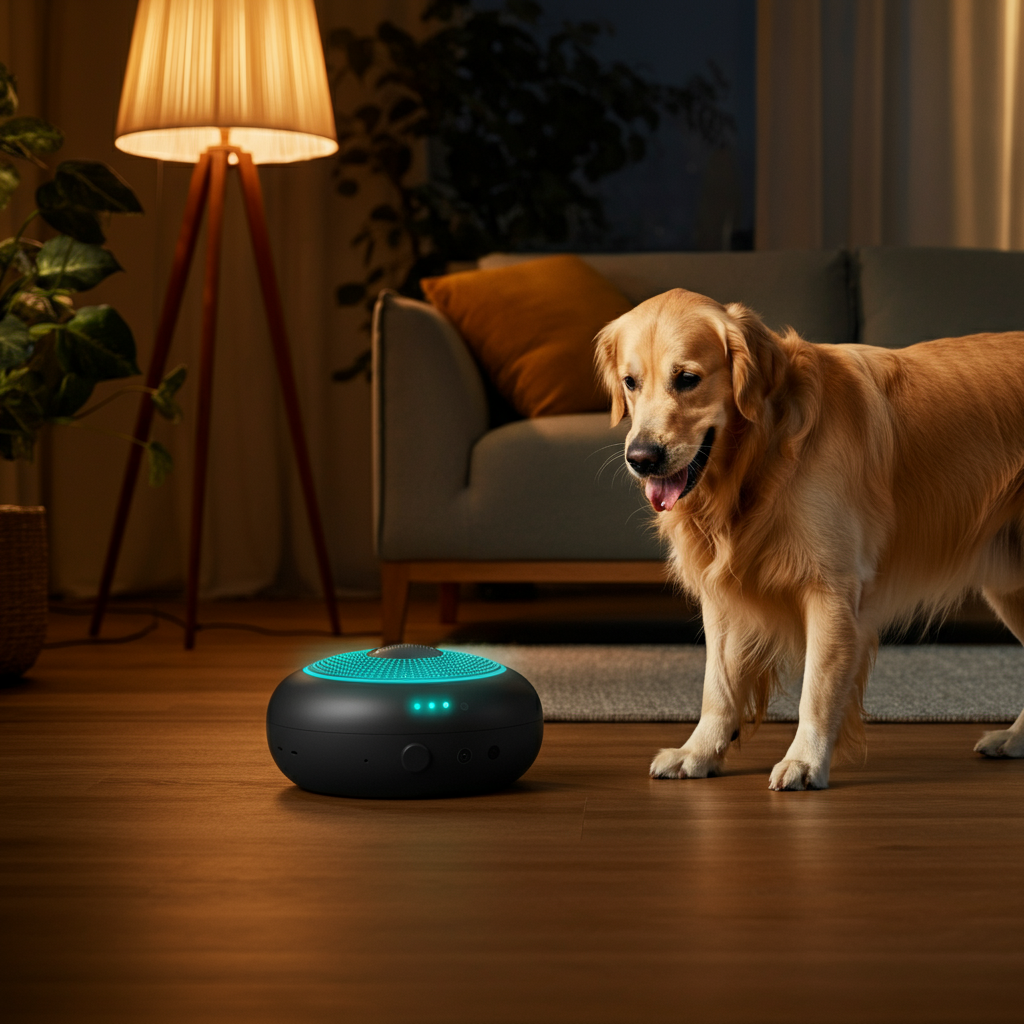
Can an Algorithm Actually Train Your Dog Better Than You Can?
By 2026, over 34% of dog owners reported spending more than $500 annually on behavioral training — and most still said their dogs “kind of” listen. Enter AI dog trainers: automated systems that use computer vision, sound recognition, and real-time feedback loops to correct and reward canine behavior without a human in the room.
I tested three of the leading AI-powered dog training devices over six weeks. My verdict is complicated. And honestly, a little humbling.
What Is an AI Dog Trainer, Exactly?
These aren’t glorified shock collars with a Bluetooth sticker slapped on them. Modern AI dog training systems use on-device machine learning to detect specific behaviors — sitting, barking, jumping, chewing — and respond within milliseconds. The response is typically a treat dispense, a calm audio cue, or a gentle vibration pattern. The system learns your dog’s behavioral baseline over time and adjusts accordingly.
The core tech stack usually involves a wide-angle camera, an embedded neural network chip, a treat dispenser, and a companion app. Some models also integrate with smart home systems like Google Home or Amazon Alexa.
The Persona Talking Here: Busy Professional
I work from home. My 3-year-old Border Collie mix, Remy, has opinions about my Zoom calls. I don’t have 45 minutes per day for structured training sessions. What I needed was a system that could work in the background while I was heads-down — and actually show results in data I could track.
That’s exactly the promise of AI dog training. Whether it delivers is the real question.
Real-World Performance
The behavior detection accuracy varied wildly by breed and coat color. Remy — dark fur, fast-moving — threw off two of the three devices during initial calibration. The best performer used infrared depth-sensing alongside RGB camera input, which solved the low-contrast problem completely. Setup took 22 minutes total, including app configuration and treat calibration.
Within five days, Remy’s counter-surfing dropped by roughly 60% according to the app’s behavior log. I’m skeptical of the exact number, but the behavioral shift was real and visible. Consistent, immediate feedback appears to work — even when the trainer is an algorithm.
Pro and Con Breakdown
- Pro: Operates 24/7 without human supervision
- Pro: Millisecond response time outperforms human reaction speed
- Pro: Data tracking lets you visualize behavioral trends over weeks
- Pro: No emotional frustration — the AI never has a bad day
- Con: Cannot handle complex multi-command training sequences
- Con: Dark-furred or fast-moving dogs may require premium hardware
- Con: Monthly subscription fees on most platforms run $12–$28/month
- Con: No replacement for social bonding during training — the dog still needs you
Hidden Flaw Worth Knowing
Hidden Flaw: Most AI trainers are optimized for stationary behaviors like sit, stay, and down. If your dog’s primary problem is leash reactivity, door dashing, or resource guarding — behaviors that require real-world context — these devices will underdeliver. Significantly. Don’t buy one expecting a complete training solution.
Personal Tip
Personal Tip: Set the treat dispensing threshold to “conservative” during the first two weeks. The AI tends to over-reward early on while it calibrates, which can accidentally reinforce ambiguous behaviors. Tighten the criteria once the system has 10+ hours of your dog’s behavioral data logged.
Buying Recommendation by User Type
- Busy Professionals: Strong buy — automates the repetition-heavy phase of training that most owners skip due to time constraints.
- First-time Dog Owners: Conditional buy — pair it with at least four sessions with a certified human trainer first.
- Owners of Reactive or Anxious Dogs: Skip it — this tech is not designed for complex emotional regulation cases.
- Multi-dog Households: Wait — most current systems track only one behavioral profile at a time.
Discover More Dog Tech
If automated training has your attention, the connected pet ecosystem goes much deeper. Here’s where to explore next: